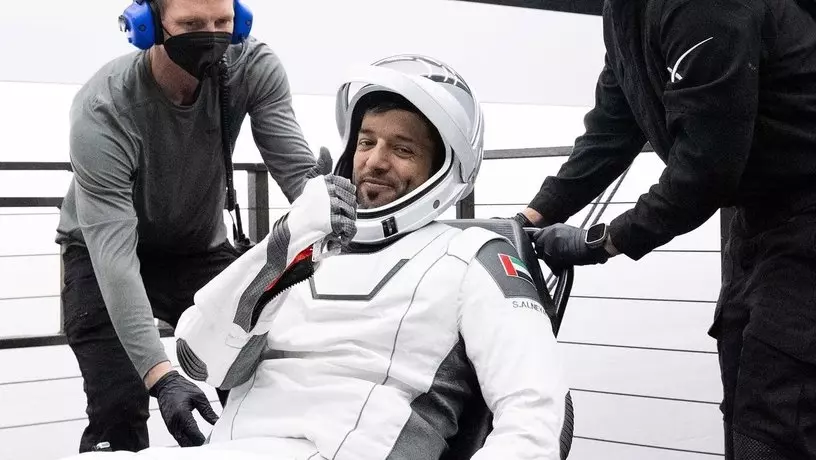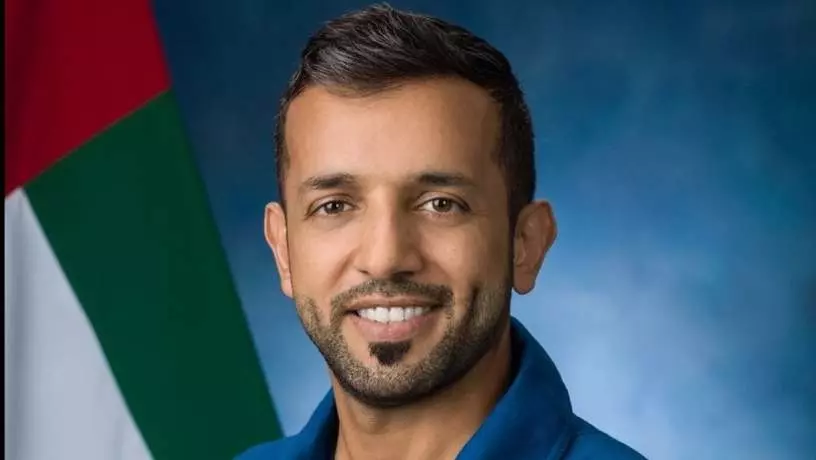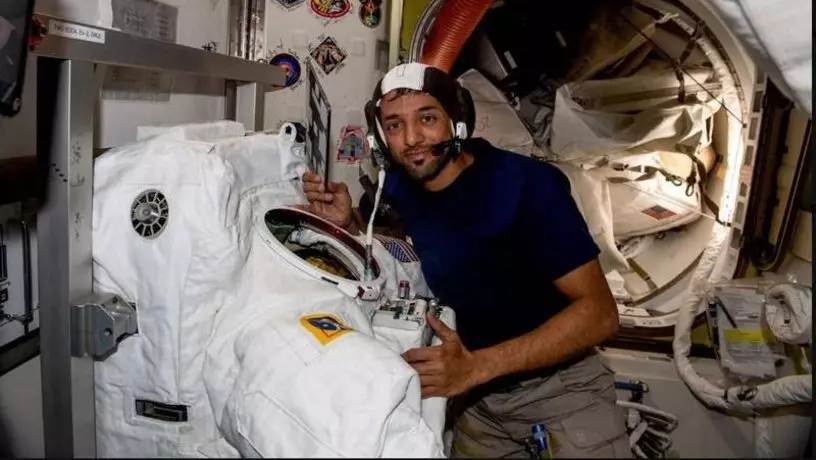
The UAE’s Sultan Al Neyadi will etch his name in the history books once more by becoming the first Arab astronaut to perform a spacewalk later this month.
The landmark achievement was announced by Sheikh Hamdan bin Mohammed, Crown Prince of Dubai, on social media on Thursday.
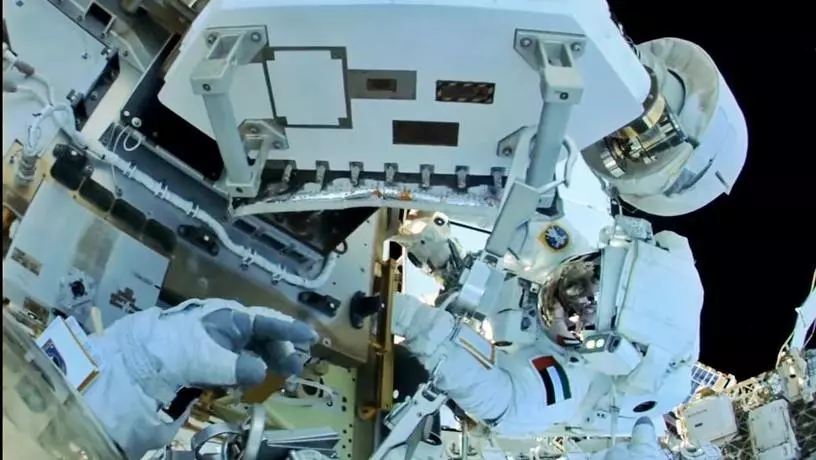
On April 28, Dr Al Neyadi, 41, will venture outside of the International Space Station with Nasa colleague Stephen Bowen for six and a half hours.
The duo will replace the communication hardware that is installed on the exterior of the orbiting science laboratory.
Only 259 astronauts have floated outside of the ISS since it was launched in 1998, and less than 700 spacewalks have been performed since space exploration began decades ago.
Salem Al Marri, director general of the Mohammed bin Rashid Space Centre, told The National that Dr Al Neyadi was selected by Nasa to perform the spacewalk.
“He’s been training since 2018, and training with Nasa since 2020, so he’s proven his capabilities,” he said.
“I’m very excited for him and he’s very happy. It’s quite historic and shows how far our space programme has gone.”
The UAE is the first non-partner country of the ISS that will have one of its astronauts outside the station for a spacewalk.
Previously, only astronauts from countries that have invested in the ISS — the US, Russia, Europe, Canada and Japan — have performed spacewalks.
“In the 22 years that the ISS has been up there, this is the first time this activity is happening by a non-ISS partner,” Mr Al Marri said.
Spacewalks are daunting tasks that require lots of training.
Dr Al Neyadi has spent hours in the Neutral Buoyancy Laboratory at Nasa’s Johnson Space Centre in Houston — one of the world’s largest indoor swimming pools with a mock-up of the ISS beneath it.
Astronauts wear their 127kg extravehicular suits, more commonly known as EVAs, and practice underwater for several hours.
But the real one is a lot more challenging.
Dr Al Neyadi will put on his bulky EVA while inside the space station, be tied to a tether, exit the airlock and then climb outside of the structure to begin the repair work.
All of this while floating in microgravity more than 400km above the Earth, as the station moves about 8km per second, completing a full circle around the planet in just 90 minutes.
“He’s very excited and he’s trained for so long,” Mr Al Marri said.
“EVA is an activity where you’re not going to select somebody that’s not capable. There’s obviously an element that can be dangerous.
“So, you select someone that has those capabilities, and Sultan is an astronaut that has been trained.”
Mr Bowen, Dr Al Neyadi's partner during the spacewalk, is an experienced astronaut, having logged more than 40 days in space, including seven spacewalks.
The 59-year-old joined Nasa in 2000 and has served on four Space Shuttle missions, including an ISS assembly mission.
While Dr Al Neyadi is probably safe in the hands of Nasa’s mission control in Houston, the ageing spacesuits have caused concern in previous spacewalks by other astronauts.
Walking in space is a daunting enough task but the bulky design of the suit makes it even tougher.