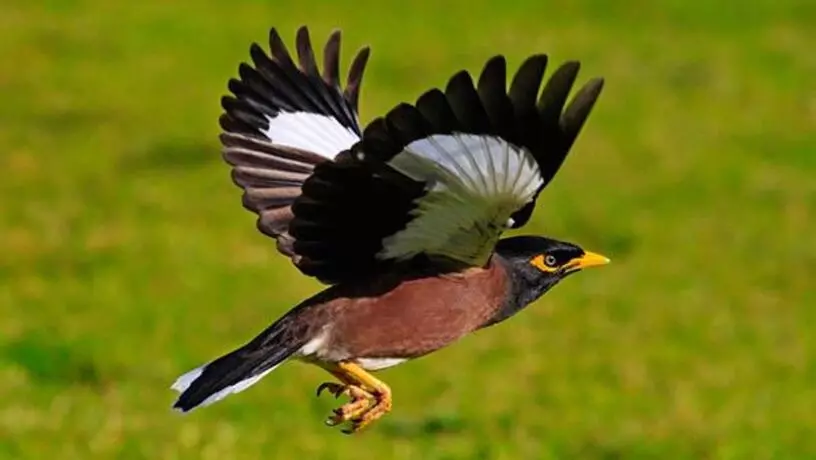
The UAE has identified six invasive bird species as priority threats under a national strategy aimed at protecting biodiversity, amid growing concerns over the environmental, agricultural and public health risks posed by non-native wildlife.
The Ministry of Climate Change and Environment said invasive birds can rapidly adapt and reproduce, outcompete native species for nesting sites and food resources, disrupt ecological balance and potentially transmit diseases, Al Khaleej newspaper reported.
The priority species identified under the UAE National Invasive Species Strategy and Action Plan (NISSAP) include the common myna, bank myna, rock pigeon, Indian house crow, Alexandrine parakeet and rose-ringed parakeet.
The ministry said the strategy establishes a unified national framework for managing invasive species in coordination with authorities across the seven emirates. The plan focuses on improving public awareness, strengthening institutional capacity, preventing the introduction and spread of invasive species, managing priority species and enhancing cooperation at national, regional and international levels.
Measures already being implemented include reducing access to food sources through improved waste management, developing species-specific control plans based on international best practice and restoring ecosystems affected by invasive populations.
The ministry said regular emergency response simulations are also being carried out to strengthen preparedness and coordination between federal and local authorities, academic institutions and non-governmental organisations.
Invasive birds are increasingly viewed as a challenge for the UAE’s environment and urban landscape. Beyond competing with native wildlife for food and habitat, some species can damage crops and fruit trees, while others contribute to visual pollution through uncontrolled nesting and waste accumulation on buildings and public infrastructure.