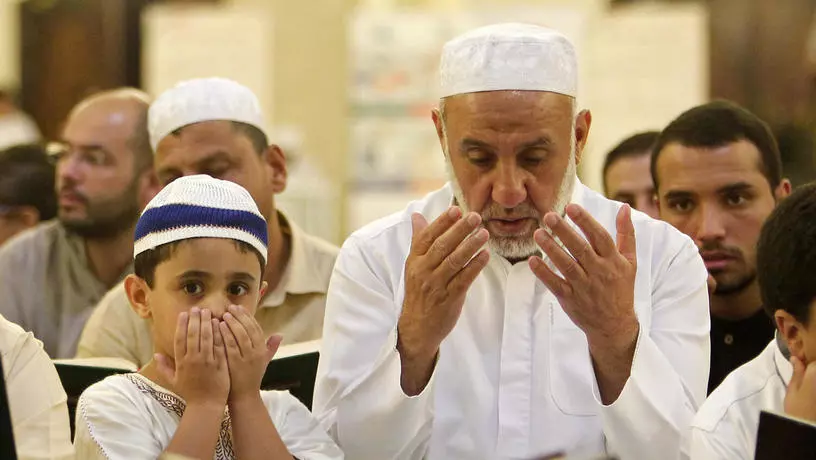
During this time, Muslims are required to elevate their level of spiritual and physical submission to their faith by way of fasting. The abstention from eating and drinking is intended to last from dawn until dusk throughout the 29 or 30-day period.
Understandably, such a change to so many people’s daily routines has a big impact on society. Work and school hours are cut short, and some restaurants are closed during the day, with some limited to dine-in guests only.
In 2026, Ramadan is expected to begin on Tuesday February 17 or Wednesday February 18. If this is the case, the annual fast will end on either March 18 or March 19, with Eid-al-Fitr starting the next day.
That said, it is important to note that the exact date of Ramadan’s beginning is determined by religious scholars under the cover of night.
They must observe certain sightings related to the appearance and cycle of the moon – so the specific dates can vary, albeit typically only by a day or two at most.
The estimate comes from predictions made by the International Union for Astronomy and Space Sciences in the UAE.
If it does turn out to be wrong, it is unlikely to be more than a day or two out – so it should provide enough time to forward-plan your diaries in advance.
During Ramadan, Muslims are required to elevate their level of spiritual and physical submission to their faith by way of fasting.
The abstention from eating and drinking is intended to last from dawn until dusk throughout the 29 or 30-day period.
At sunset every day, cannons will be heard around the city, which signal that it’s time to break the fast with a meal called an iftar.
Another meal, called a suhoor, is traditionally eaten in the early hours of the day before fasting hours begin.
During Ramadan, working hours are shorter for both the public and private sectors.
Public school kids across the UAE also adopt distance learning one day per week during the month.