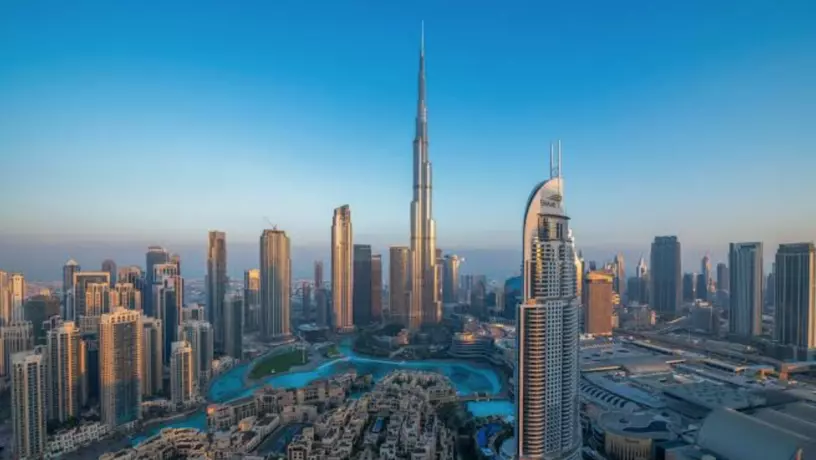
Abu Dhabi and Dubai have been ranked as the best cities in the Gulf in a new league table, emphasising their growing international influence and economic power.
Both have again been listed inside the top 50 of the annual Global Cities Index, compiled by the Kearney Foresight Network, due to the infrastructure investment and their success in embracing digital strategies.
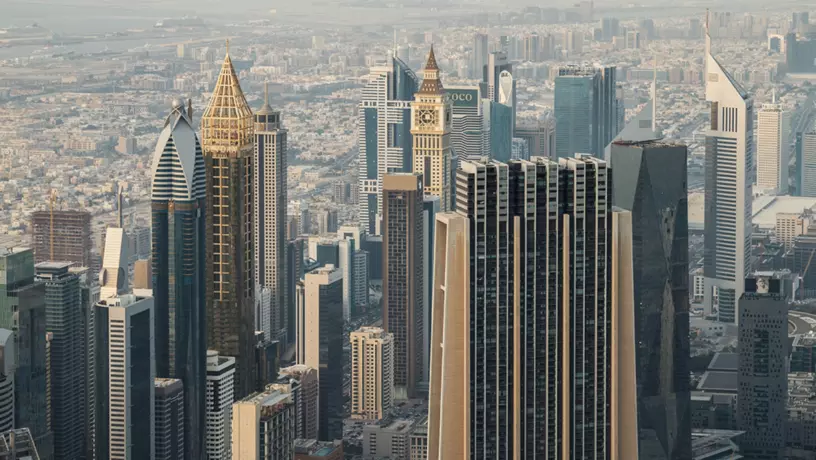
Dubai remains the top-ranked city in the Gulf, rising one place from last year to 23rd on the global list. Abu Dhabi has climbed 10 places to 49th.
Qatar's capital Doha has retained its position at 51st in the international table, while the Saudi and Bahraini capitals have also improved their standings. Riyadh has moved up eight places to 56th, with Manama jumping 10 spots to 125th. Saudi cities Dammam and Madinah have also moved up the league.
Established urban hubs lead the way again this year, with New York followed by London, Paris, Tokyo and Singapore in an unchanged top five. Cities such as Almaty, Taipei and Rio de Janeiro made notable gains.
The Global Cities Index report is an annual two-part assessment of growth in the world’s leading metropolitan areas and seeks to understand how cities connect, compete and adapt to global change.
It evaluates five criteria across 158 metropolitan areas, including business activity, human capital, information exchange, cultural experience and political engagement.
Dubai and Abu Dhabi have been considered the best cities for ease of entry, thanks to a tranche of new long-term visa options, as well as gradual societal reforms.
Kearney Foresight principal Brenna Buckstaff said Gulf cities are well-placed to shape the next era of global leadership through their systemic reforms and forward-looking strategies.
“Gulf cities continue to translate long-term transformation agendas into measurable progress,” she said. “Their rise reflects the results of sustained investment in talent, infrastructure, and environmental resilience – foundations that are strengthening their global competitiveness in the intelligence age.”
Gulf cities have also been ranked prominently in Kearney's Global Cities Outlook (GCO) report, which projects potential future performance.
Dubai, is the region’s highest-ranked city in the GCO, surging 19 places to rank 25th on the strength of its innovation environment and improvement in personal well-being.
Government services in the UAE have been streamlined for ease of use, with more remote access to everyday necessities via online apps and technology to reduce bureaucracy.
Expanding urban growth with investment in infrastructure projects such as major highways, bridges and the Dubai Loop, an underground connecting tunnel for autonomous transport, are examples of urban evolution, the report found.
Saudi Arabia also stood out on Kearney’s GCO list for the scale and breadth of its progress. Riyadh moved up eight places in the GCO rankings to 68th thanks to urban transformation such as the $195 billion investment pipeline for mega projects, including huge parks, entertainment districts and improved neighbourhoods, green spaces and public services.
Makkah, Madinah and Dammam also moved up the GCO rankings when compared to last year.
Gulf cities are continuing to attract new talent to bolster growth, the report said. Welcoming immigration programmes, alongside targeted investments in education, workforce development and inclusive opportunities have helped Dubai become an attractive destination for workers, it stated.
Riyadh, Abu Dhabi and Manama were also highlighted for leveraging their reputations for safety, business opportunities and global connectivity.
“What’s striking in this year’s results is not just which cities moved up or down, but why,” said Rudolph Lohmeyer, senior partner of the Global Business Policy Council and head of the National Transformations Institute of the Kearney Foresight Network.
“Cities are no longer defined by legacy advantages or sheer scale. Their competitiveness now rests on how well they can cultivate talent, build trust in digital systems, and design liveable environments that can withstand volatility.
“The Gulf’s trajectory is a clear example of how aligning these factors can change a city’s global standing in just a few years.”